
Author: taimur

Top 10 Hazards Around Your House For Your Pups

Top 10 Hazards Around Your House For Your Pups

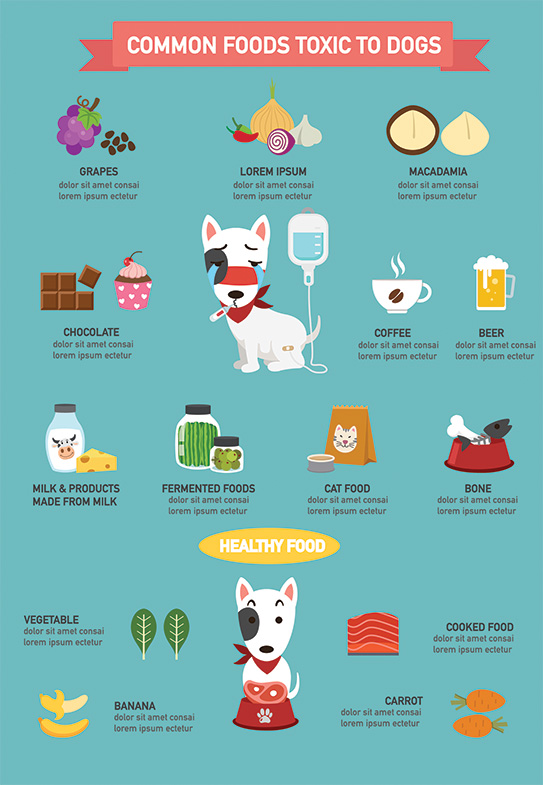
It is very important not to share food from your plate with a dog before you check to see if it is safe. It is also critically important to make sure that herbicides and pesticides are locked up like you would if you had a toddler to protect. Here are some of the top dangers your dog could come in contact with:

1. Chocolate (especially dark chocolate)

Can cause toxicosis resulting in seizures and death.

2. Grapes and raisins

Can cause renal failure

3. Macadamia Nuts

Are poisonous to dogs.

4. Onions and Onion Powder and Garlic

Kill canine blood cells. Garlic is not as bad but in large amounts can be toxic.

5. Cooked bones

Cooked bones of any type can splinter and result in choking hazards or trips to the emergency room due to becoming lodged in the mouth or throat. Cooked bones splinter unlike raw bones.
6. Pharmaceuticals

Many people are not aware that dogs cannot take many human medications. In fact, many dogs die each year from ingesting meds accidentally dropped on the floor by their owners. If a dog ingests Aleve, Tylenol, or Advil etc., it can result in renal failure. Always consult your veterinarian before using a human medication on a dog.

Veterinary prescriptions can also become dangerous or deadly to your dog if he overdoses. Make sure to keep his heart worm and flea and tick medications well out of reach. Since they are flavored so that he will take them, he may also eat the whole box if it is within reach. Be very cautious about this.

7. Household Items

Electrical cords, batteries, small toys (choking hazards), dryer sheets, and anything that is ingestible (socks, towels) can cause intestinal obstructions and lead to costly surgeries or death. This is why the use of confinement devices with puppies and young dogs is important. Similar to babies who put everything in their mouths.

8. Insecticides, Rodenticides, Cleaning Products, and Antifreeze.

These are things you might have in the garage or under your sink. If the dog ingests any of these products it could lead to death. Never leave a dog locked in a garage with these items. He must be in a crate or dog run in these areas to remain safe.

9. Toxic Plants

Many people don’t even realize that certain plants can harm or kill their dog. Common houseplants as well as plants that are in your yard may be overlooked. There are too many toxic plants to name here but you can easily look them up. Some people are shocked to find a hidden toxic plant in their yard if they moved into a home that was already planted. Your dog may find it before you do, so best take a walk around and look up any plants you are not sure of.

10. Cigarettes, and street drugs

Many dogs die each year from ingesting street drugs. Any drug from alcohol to cigarettes, to weed, can make your dog very ill or in extreme cases like cocaine or heroin among others can actually kill your dog. It is not funny to allow your dog to drink alcohol or blow smoke in his face. It’s similar to doing this to a 2 year old. Not funny!

10 Things You Need When Purchasing a New Puppy

10 Things You Need When Purchasing a New Puppy

Common questions are how to handle housebreaking, chewing, playful biting, and the general chaos that can ensue when puppies are mixed in with small children. We have included a list of confinement devices here to help you feel like you have some control. Never fear! Puppies grow up quick so just remember this will not last forever, but there are ways to make the process easier.

1- A Well Puppy Veterinary Visit

It is an exciting time when a new puppy comes home! Because of this it is common for people to wait awhile to set a veterinary appointment. It’s a good idea to see the vet within 48 hours of bringing the puppy home. In case something is discovered you don’t want to be overly attached or let children become overly attached. It is also important to get the puppy on a vaccination schedule and parasite control.

2- Confinement Tools (Puppy Pen, Crate, Baby Gates)

The most common mistake that people make with a puppy is letting it run freely around the house. This is dangerous for the puppy (chewing on electric cords, chewing on poisonous plants, picking up dangerous things like medications) on the floor. A puppy pen will keep the puppy safe and keep your things safe from the puppy. Crates are good for containment at night if you are willing to get up halfway through the night to take the puppy out to potty. Baby gates are good to help keep the dog within your sight when you are watching him.

3- Potty Box with Litter or Shavings

This can be put in the puppy pen during the night, or at any time when you will be away from home where you cannot take him out for a potty break. Litter boxes for puppies need to be much larger than cat litter boxes. Generally, you are looking for a 3×3 or 4×4 depending on the size of the puppy. Do not purchase potty pads. They teach the puppy that its okay to go potty on material on your floor. This sets up a future housebreaking issue.

4- Stainless Steel Water and Food Bowls

Stainless steel is easy to clean because it is nonporous and will not hold bacteria like plastic. Wash dirty dishes every time the puppy eats. Get your puppy on a regular feeding schedule in order to help you with housebreaking. If you know when the puppy eats, you will know when he will need to go potty.

5- Quality Food

What is quality food? Food with actual quality protein, not byproducts which are the leftover parts that humans don’t consume ( beaks, feet, and feathers) and preferably without large amounts of grain. Taurine is important for heart health and should be seen in the section where you find the vitamins on the ingredient list. More dogs are now allergic to chicken and beef than ever before, so consider lamb, or venison, or another type of protein. Top grain allergies are corn, wheat, and soy.

6- Heartguard and Parasite Control

Anywhere there are mosquitos there is potential for heartworms. Your puppy should start immediately on preventative pills based on its weight. Some pills prevent both heartworms and fleas and ticks. Fleas carry tapeworms and ticks carry Lymes disease. Don’t take chances with your dog’s health or your families health where these parasites are concerned. One or two monthly pills is all it takes to get rid of these issues.

7- Car Safety

Get your puppy a car carrier or seat belt harness to protect him in case you have an accident. Too many dogs are injured every year because they are not properly contained or belted into vehicles. Dogs should never be tethered in the back of trucks. There are too many ways to be injured by flying debris or sudden braking or accelerating. Many dogs have fallen out or when tethered hung themselves on the sides of trucks.

8- Harness & Leash for Critical Fear & Socialization Period

Collars on untrained puppies can cause trachea damage due to the puppy pulling on them with all the pressure going onto the trachea. The standard leather or nylon flat collar is actually the most dangerous. Until the puppy is properly trained how to walk on a leash, he should be walked on a harness.

9- Healthy Treats for Puppy Pre-School

Do some research on healthy treats for your puppies’ pre-school training. There are treat recalls from time to time. In general, you want to stay away from treats not made in America which are harder to vet. In general, you want a small treat that is easy to check and swallow quickly. You don’t want something crunchy where pieces fall to the floor or where it takes time for the puppy to chew. Timing is very important in training and waiting for the puppy to munch away is not optimal.

FIND THE RIGHT TRAINER- Months Ahead of Time

It is not uncommon for the best trainers to be booked months in advance. When you decide to get a puppy, you should start researching immediately. It takes time to do your research and if you wait until the point where the vaccinations are complete (4 months) to find a trainer, they may be booked out 4-6 months out in advance. Do your research on methods. Do not use an e-collar on a puppy under one year of age. Just like a child’s education, the puppies’ education should be age appropriate. Puppy pre-school should start with treats, as they get to 4-6 months of age, training collars can begin to be used (properly) with a lot of verbal and tactile praise (with a professional trainer’s oversight). What training collar is appropriate to your dog will have to do both with its temperament, and your ultimate goal. A good trainer should be able to evaluate your dog and explain the plan for the training program.